
Regimental Tartans: Threads of Courage Woven in Scotland's Military Heritage

For over 300 years, regimental tartans have been woven into the identity of some of the world's most legendary military units. These patterns are not mere decoration—they are symbols of courage, belonging, and sacrifice, worn by soldiers from the glens of Scotland to battlefields across continents.
At Great Scot, we preserve this heritage by working exclusively with Scotland's family-owned traditional mills to weave authentic regimental tartans—the same patterns carried into history by the Black Watch, the Seaforth Highlanders, the Argyll & Sutherland Highlanders, and dozens of other distinguished regiments.
Whether you're honouring an ancestor who stood in the "Thin Red Line" at Balaclava, a great-grandfather who fought at Passchendaele, or simply connecting with Scotland's military legacy, our collection tells a story of valour that spans generations.
The Origins of Regimental Tartans
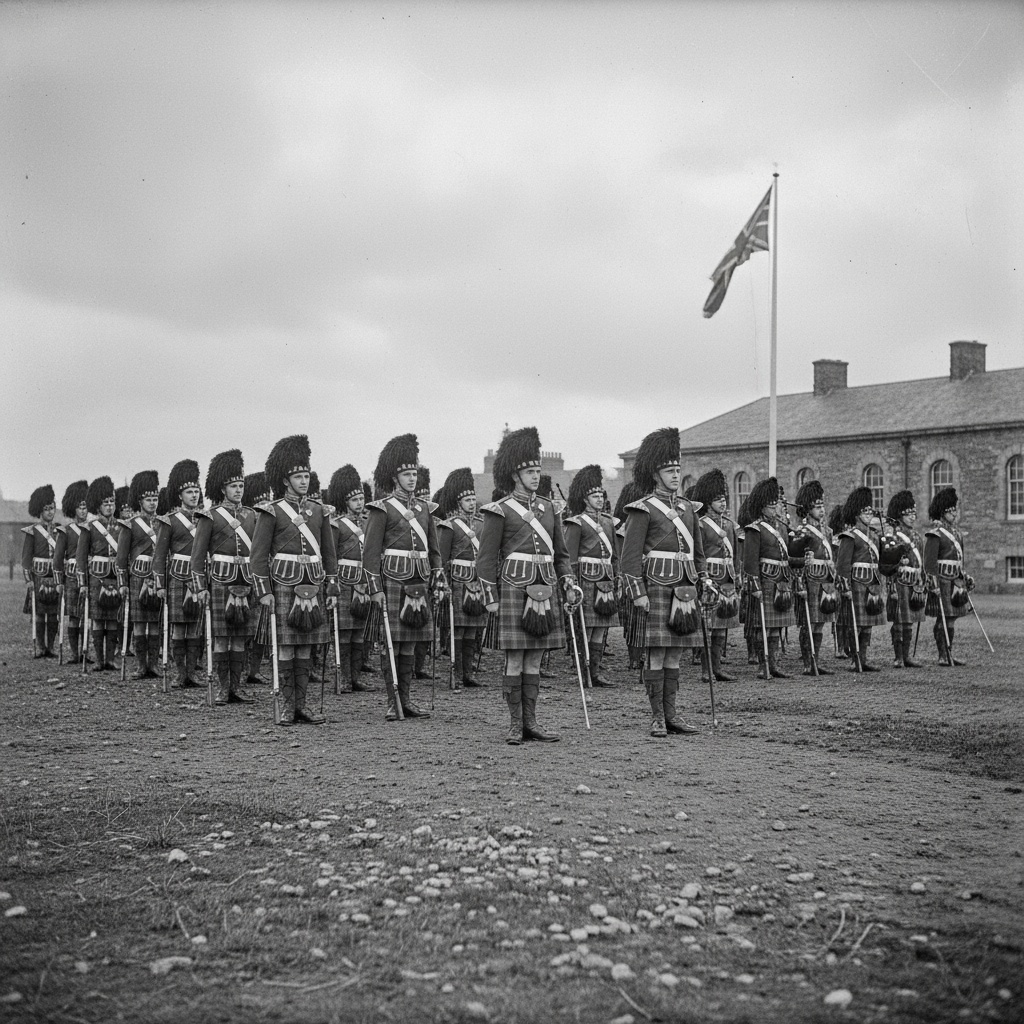
Regimental tartans emerged in the 18th century as Highland regiments were raised to serve the British Crown. Initially, soldiers wore their clan tartans into battle, but as regiments formalised, specific patterns became associated with military units.
The Black Watch tartan is the most iconic. Established in 1725, the Black Watch, officially the 42nd Regiment of Foot, became the senior Highland regiment. Its dark blue, green, and black pattern became synonymous with Scottish military prowess and was adopted or adapted by numerous other regiments.
Legendary Regiments and Their Tartans
Black Watch (The Royal Highland Regiment)
The Black Watch tartan is the foundation of Scottish military dress. Formed to "watch" the Highlands, the regiment earned legendary status through campaigns in North America, the Napoleonic Wars, both World Wars, and beyond.
Seaforth Highlanders (78th Regiment of Foot)
Raised in 1778 by Kenneth Mackenzie, Earl of Seaforth, the Seaforth Highlanders wore the Mackenzie tartan as their regimental colours. They served with distinction from the Napoleonic Wars through both World Wars until amalgamation in 1961.
Argyll & Sutherland Highlanders
This regiment wore the Sutherland tartan. The 93rd earned immortal fame as the "Thin Red Line" at the Battle of Balaclava during the Crimean War, a moment when a single line of Highlanders held firm against a Russian cavalry charge.
Scotland's Diaspora: Tartans Around the World

Regimental tartans tell not only the story of Scotland's regiments but also of Scotland's global diaspora, the Scots who carried their heritage to every corner of the world.
🇨🇦 Canada: Black Watch of Canada
The Black Watch of Canada continues to wear the iconic Black Watch tartan, maintaining a direct link to their Scottish forebears. Canadian Highland regiments played crucial roles in both World Wars.
🇳🇿 New Zealand: Highland Rifle Volunteers
Scottish settlers in New Zealand formed their own Highland regiments, wearing traditional tartans and maintaining Scottish military customs thousands of miles from home.
🇿🇦 South Africa: Cape Town Highlanders
Founded in 1885 by South Africans of Scottish descent, the Cape Town Highlanders wore the Gordon tartan and served with distinction in the Boer Wars and both World Wars.
Why Regimental Tartans Matter Today
Regimental tartans are more than historical artefacts; they are living connections to the past. For many families, wearing a regimental tartan is a way to honour ancestors who served, to remember sacrifices made, and to preserve military heritage for future generations.
At Great Scot, every regimental tartan we offer is:
- Woven traditionally in Scotland by family-owned mills
- Historically accurate to the original regimental patterns
- Made to order or available from stock
- Ethically produced to support Scotland's rural textile communities
How to Choose Your Regimental Tartan
1. Research Your Family History
Check military records, family documents, or speak with older relatives about ancestors who served.
2. Understand Regimental Connections
If your ancestor served in a specific regiment, wearing that regimental tartan is a meaningful tribute.
3. Quality and Authenticity Matter
Ensure your tartan is woven traditionally in Scotland, not printed or mass-produced overseas.
The Great Scot Difference
As the second-largest buyer of traditional woven tartans and tweeds in the UK, Great Scot plays a vital role in sustaining Scotland's textile industry. Our partnerships with family-owned mills support traditional weaving skills passed down through generations, rural Scottish jobs, and historical accuracy in every tartan we weave.
When you purchase a regimental tartan from Great Scot, you're not just buying fabric; you're supporting the survival of Scotland's textile heritage and honouring the soldiers who wore these patterns with pride.

Honour Military Heritage
Explore our collection of over 80 authentic regimental tartans, each woven traditionally in Scotland.
Lest we forget.
Shop Regimental TartansFrequently Asked Questions
Can anyone wear a regimental tartan?
Yes. While regimental tartans have military associations, they are not restricted. Many people wear them to honour family military connections or to show respect for Scottish military heritage.
Are your regimental tartans historically accurate?
Absolutely. We work only with mills that prioritize historical accuracy and use traditional weaving methods to reproduce authentic regimental patterns.
How long does it take to receive a regimental tartan?
Many tartans are in stock and ship immediately. If new weaving is required, lead times can be up to 12 weeks.
Do you ship internationally?
Yes, we ship worldwide.

Ready to Explore Our Collection?
Browse over 80 authentic regimental tartans, from the iconic Black Watch to rare diaspora regiments.
View All Regimental Tartans